Five things to know before walking the decumanus
- Spaccanapoli isn’t the official name. Along the route the street is called via Pasquale Scura, via Benedetto Croce, via San Biagio dei Librai, via Vicaria Vecchia, via Forcella, via Giudecca Vecchia, via Ottavio Tupputi: seven signs, none say Spaccanapoli. The reason is in how the nickname came about.
- From one end to the other it’s about two kilometres, but the monumental stretch, from piazza del Gesù Nuovo to via Duomo, is just over a kilometre and takes about half an hour to walk without entering anywhere. The exact figures are in how long it is.
- The street is free, the interiors aren’t. The tiled cloister of Santa Chiara, the Cappella Sansevero and the underground have their own ticket; a guided tour weighs differently depending on how many entrances it includes. We explain what makes the difference in how much it costs.
- Via San Gregorio Armeno isn’t Spaccanapoli. It’s the nativity scene street that connects via dei Tribunali to the lower decumanus, and from early November to 6 January it’s shoulder to shoulder: when it’s best to go.
- The Quartieri Spagnoli are a different area. They lie uphill from via Toledo, on the opposite side of the decumanus, and were built in the 16th century as housing for Spanish garrisons: the difference in two minutes.
What you don’t pay for and what you book
The most common confusion I hear is this, so I’ll make it clear right away: on one side the street, on the other what opens onto it.
What you don’t pay for
- Walking the entire length of Spaccanapoli, at any time: it’s a public road and never closes
- Piazza del Gesù Nuovo with the Immacolata spire and the piperno ashlar façade
- The church of Santa Chiara, which has a separate entrance from the cloister
- Piazzetta Nilo with the statue of the Nile god, which locals call the Corpo di Napoli
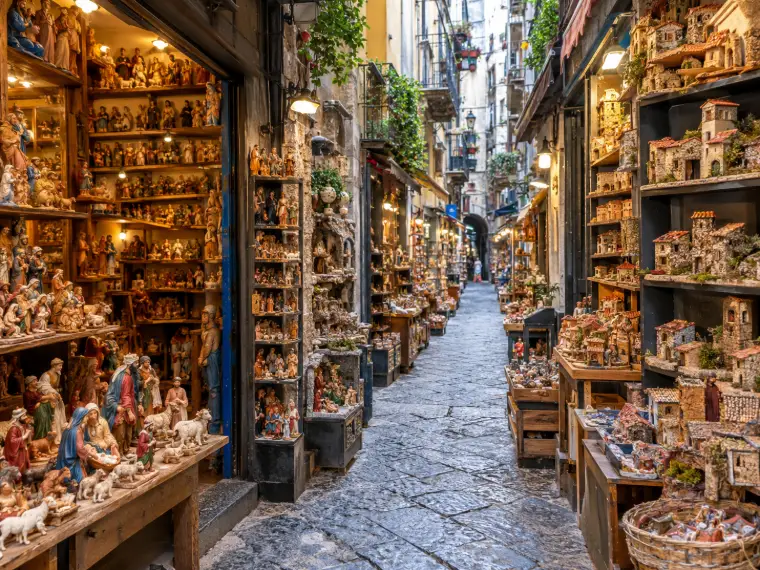
- Looking at the nativity scene workshops in via San Gregorio Armeno, which work all year round, not just in December
What you book
- The guide, which is the real reason a tour is worth it: in front of a closed door, on your own, you don’t understand anything
- The Cappella Sansevero, with timed entry and narrow rooms
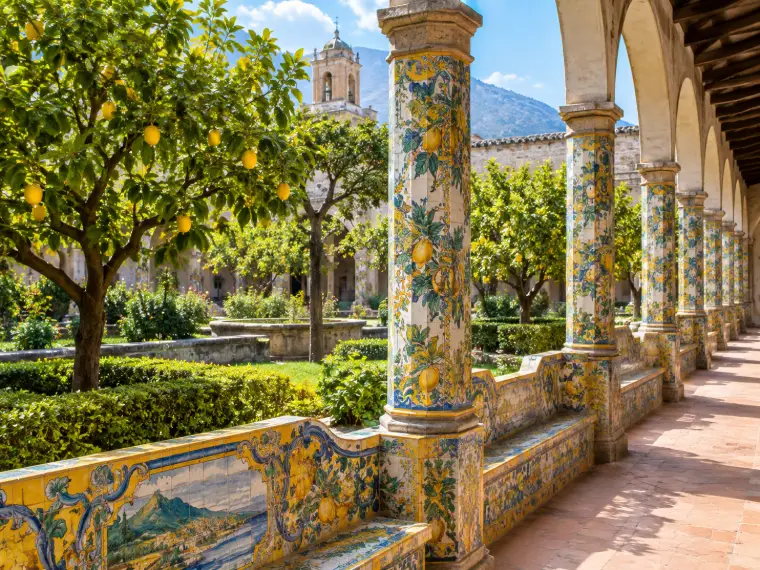
- The tiled cloister of Santa Chiara, with the tiles painted by Donato and Giuseppe Massa between 1739 and 1742
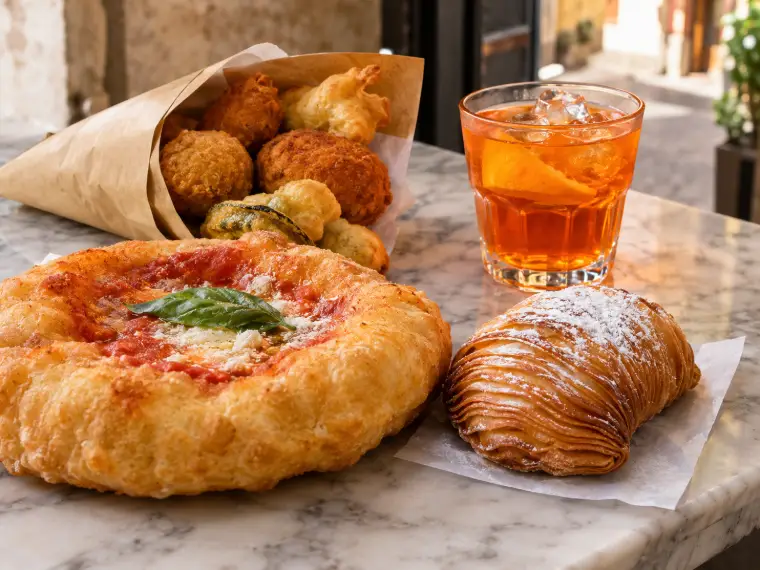
- Tastings, if you choose a street food tour instead of a historic one
- Private format, when the pace matters more than the price: when it makes sense
The decumanus step by step, from west to east
The doors that open onto the straight line, in the order you encounter them.
The stretch that’s easiest to walk goes from piazza del Gesù Nuovo to via Duomo: just over a kilometre, about half an hour at a slow pace if you don’t enter anywhere, half a day if you do. The full stops are in what to see.
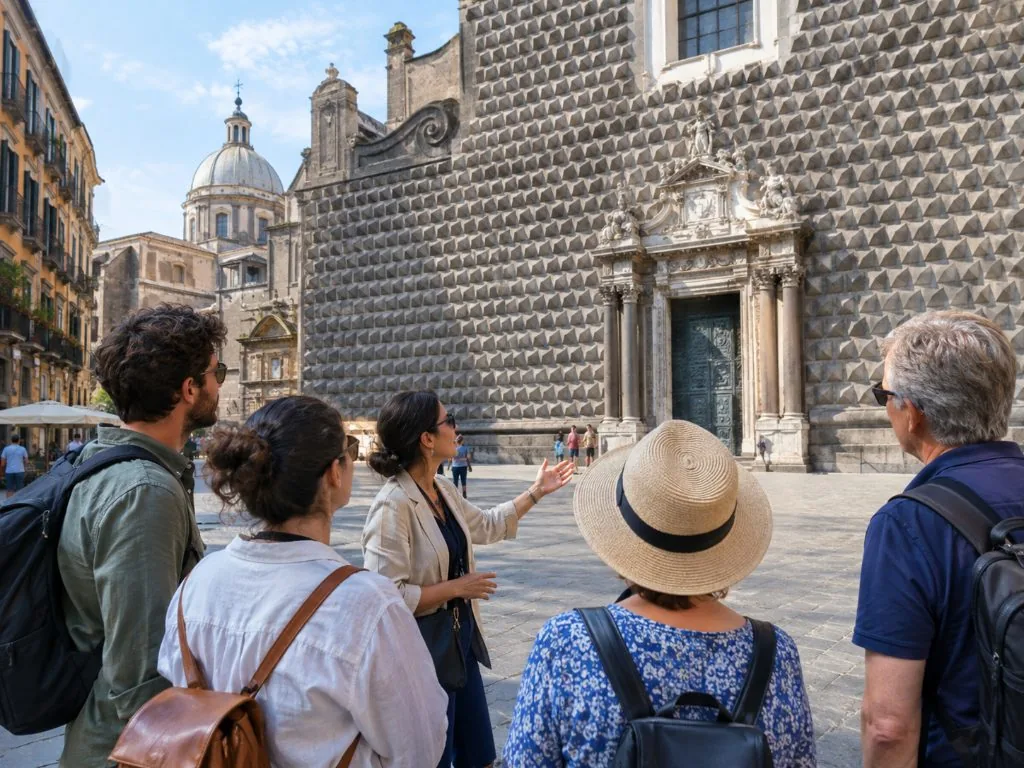
- Piazza del Gesù Nuovo — The diamond-pointed piperno ashlar façade was the palace of the Sanseverino princes, 1470. In the square stands the Immacolata spire.
- Santa Chiara complex — A 14th-century basilica commissioned by Robert of Anjou. The tiled cloister, covered with tiles by Donato and Giuseppe Massa between 1739 and 1742, has a paid entrance separate from the church.
- Piazza San Domenico Maggiore — Thomas Aquinas taught in the convent and Giordano Bruno studied here. It’s the square where you’ll happily stop.
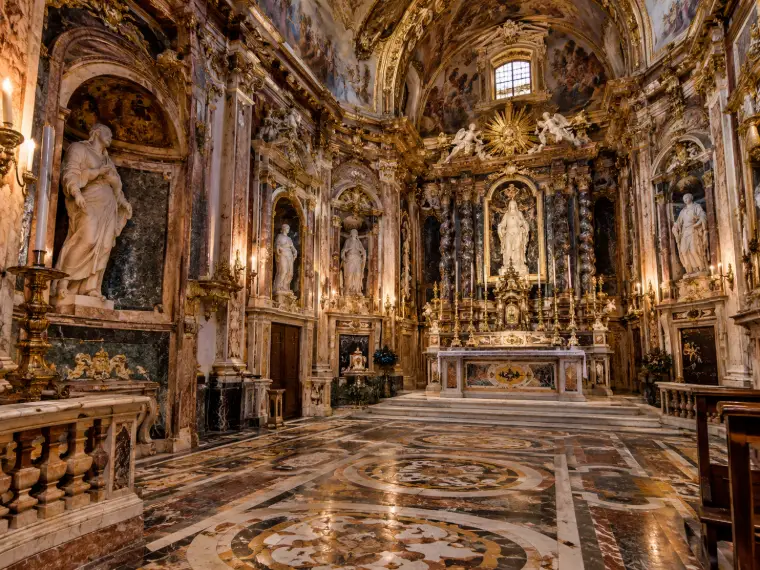
- Cappella Sansevero — On via Francesco de Sanctis, a few steps from the street: the Veiled Christ by Giuseppe Sanmartino, 1753, and in the underground chamber the two anatomical machines. Timed entry, small rooms, no photography inside.
- Piazzetta Nilo — Largo Corpo di Napoli: the statue of the Nile god, which Neapolitans call this, and next to it Sant’Angelo a Nilo.
- Via San Gregorio Armeno — It cuts perpendicularly and connects via dei Tribunali to the lower decumanus. The church was founded around 930 on a temple dedicated to Ceres and named after San Gregorio Armeno only in 1205; the bell tower spans the street like a bridge.
- San Lorenzo Maggiore — On the main decumanus, a step away from the nativity scene street: from here you descend to the excavations beneath the basilica.
- Via Duomo — Here the monumental stretch ends. Beyond, towards the east, the decumanus becomes more residential and quieter in the evening: where the street really begins and ends is in where it starts and finishes.
None of these stops require a tour to be seen from the outside. The tour is useful for entering without organising anything and for having someone explain what you’re looking at: how much time to allow is in how much time you need.
How to book in three steps
Decide what you really need
Historical narrative, included entrances, tastings or a private guide. These are four different tours, not more or less expensive versions of the same one.
Check date and language
On the booking box you’ll find the actual departures, the language and the updated price. Some options have a minimum number of participants per language.
Book and meet at the meeting point
Instant confirmation, ticket on your phone, free cancellation within the stated terms. The meeting point changes from tour to tour: read it before leaving your hotel.
Availability of the most booked tour in the historic centre
If you want a safe choice and only one: two and a half hours from Gesù Nuovo to Duomo, with entrance to the Cappella Sansevero and Santa Chiara cloister already included. The updated price is below.
Narrative, entrances or tastings: which of the three
Three tours that start almost from the same point and end very differently. The full comparison of the six is in all tours.
| Naples: guided tour of the historic centre between origins, cults and legends | Recommended choiceNaples: historic centre tour with the Veiled Christ and Santa Chiara Cloister | Naples: guided street food tour with spritz | |
|---|---|---|---|
| Duration | 2.5 hours | 2.5 hours | 2.5 hours |
| Meeting point | Piazza Bellini | Piazza del Gesù Nuovo 7, in front of the information office | Piazza Bellini, next to the Greek ruins at street level |
| Included entrances | None: you stay on the street and in the squares | Cappella Sansevero and Santa Chiara cloister, on selected dates and times | None: the route is entirely outdoors |
| Tastings | Just a coffee break along the way | Not included | Tastings and drinks included at all stops |
| Languages | Italian, English, French, Spanish | Italian | English |
| Ideal for | Those who want the origins, cults and legends of the historic centre | Those visiting Naples for the first time and want to enter without organising anything | Those who prefer to understand the city by eating what locals eat |
| View → | Book this → | View → |
Photo gallery
Spaccanapoli, eight steps at a time
The stops that the tours on this page actually cover.
The six tours that truly walk the decumanus
We’ve separated them by format, not by price range: what they do changes, not how luxurious they are. Full details are in reviews.
 Most booked
Naples: city centre tour with Veiled Christ and Santa Chiara Cloister
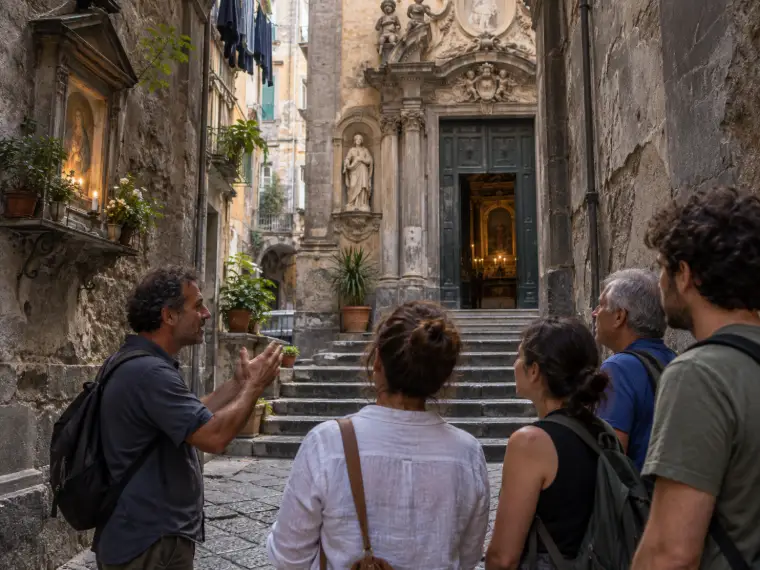 Origins and legends
Naples: guided tour of the historic centre between origins, cults and legends
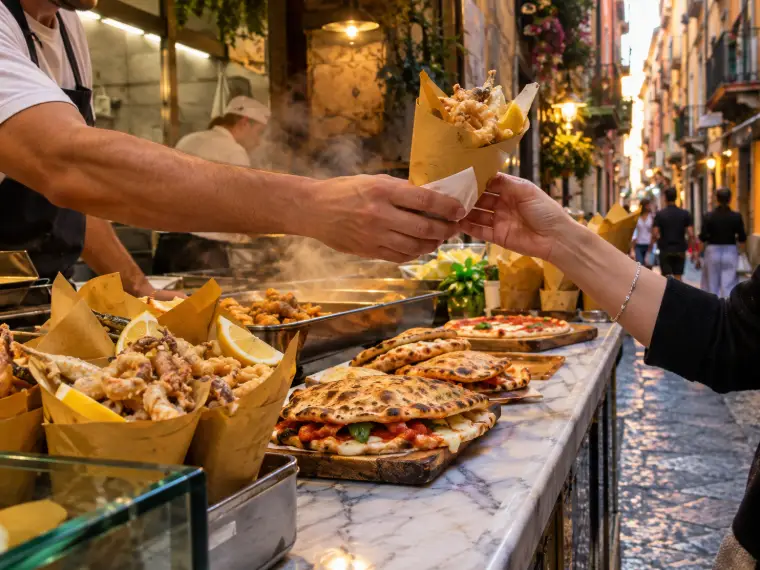 With tastings
Naples: guided street food tour with spritz
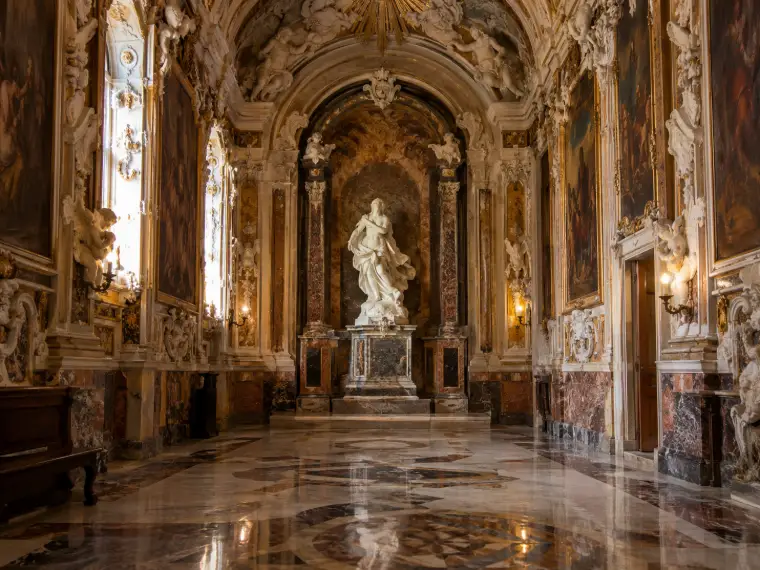 Just the Veiled Christ
Naples: Veiled Christ and Sansevero Chapel with guide
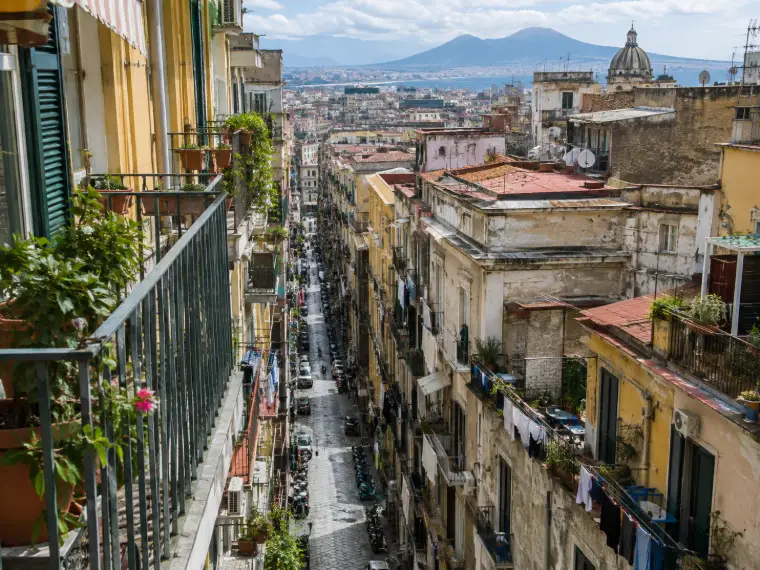 Name and surname
Naples: walking tour of the historic centre and Spaccanapoli
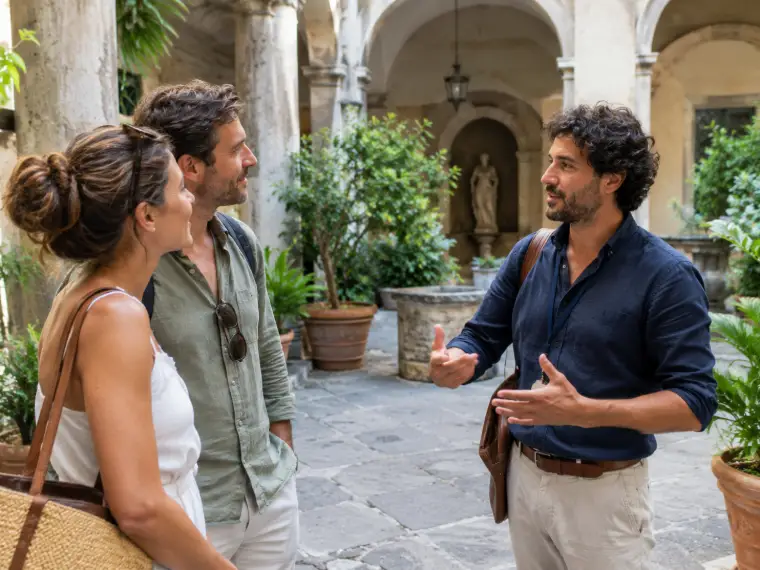 All yours
Naples: private walking tour of the historic centre
What those who took them write
Excerpts from reviews left on GetYourGuide by travellers who booked.
The guide was Nicoletta. I could have listened to her all day.
Perfect balance between history and storytelling, never losing the thread.
Daniela is energetic and fun, and there are plenty of food stops.
The Veiled Christ is one of the most beautiful things I’ve ever seen.
Miriam knows the hidden spots: the route is essential but interesting.
With a private guide, it’s the best way to see the historic centre.
Ratings and number of reviews are live data from GetYourGuide. Read our full reviews ›
Quick answers before booking
The things I’ve been asked in the bookshop for years, with the answer I’d give to a friend standing in front of the spire.
Do I need to book to walk Spaccanapoli?
No. The street is public, open and ticket-free, day and night. You book the guide and you book the interiors. If you just want to walk, all you need are shoes suitable for the basalt paving.
Is the historical tour or the street food tour better?
It depends on what you have left in your pocket at the end of the day. The historical tour explains what you’re looking at; the street food tour lets you taste and covers less history in depth. The list of tastings is in what to try on the street.
What’s the best time to go?
Early morning, almost always. In summer at midday the street is narrow and shadeless, and from early November to 6 January the nativity scene alley is shoulder-to-shoulder. The seasons in detail are in when to go.
Is it easy to get there by metro?
Yes. Line 1 to Dante, from where you go down to Port’Alba, or to Duomo or Università if you’re coming from Naples Centrale. Montesanto and Cavour are just a few minutes’ walk away: all the combinations are in how to get there.
Does it work with children?
It does, with a few precautions: the basalt paving is uncomfortable for pushchairs and scooters pass even in the narrow sections. The nativity scenes and ice cream hold short attention spans well: details in Spaccanapoli with children.
Can’t find the right date?
Check the other departures available in the historic centre and choose the one that fits your schedule: instant confirmation and free cancellation.
Spaccanapoli, explained
Spaccanapoli is the lower decumanus of Roman Neapolis and the plateia of the Greek city: a straight line of about two kilometres that runs from west to east through the historic centre of Naples, doesn’t appear on any street sign, has no entrance ticket, and owes its nickname to the view from above, where it seems to split the city in two.
I worked for years in a bookshop on via San Biagio dei Librai, and the question I heard most was asked by people who were already walking on it: excuse me, where is Spaccanapoli? It’s not that they’re absent-minded. It’s the street that doesn’t introduce itself.
Why it seems like you haven’t found it
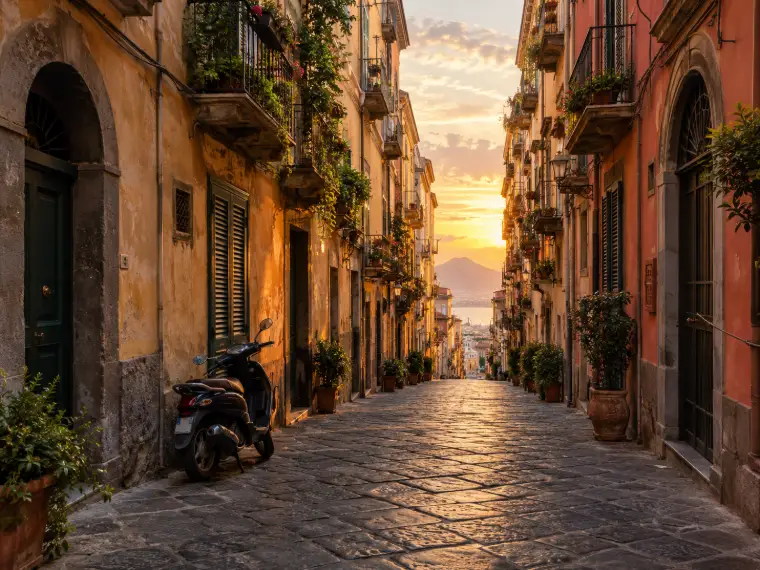
Spaccanapoli is a popular nickname, and nicknames don’t end up on street signs. Walking east, the same street is called via Pasquale Scura, via Benedetto Croce, via San Biagio dei Librai, via Vicaria Vecchia, via Forcella, via Giudecca Vecchia, via Ottavio Tupputi. Seven names for a single straight line. The name archaeologists use is lower decumanus: one of the three parallel axes of the ancient centre, with the major, which is now via dei Tribunali, and the superior, around via dell’Anticaglia. The grid they form is traced back to the Hippodamian model: here you go straight, or you cut perpendicularly.
How long it really is
From one end to the other it’s about two kilometres. The stretch worth walking is however shorter: from piazza del Gesù Nuovo to via Duomo it’s just over a kilometre, and at a slow pace, without going inside anywhere, it takes about half an hour, which isn’t a whole day: the day is needed if you open the doors. The historic centre of Naples has been a UNESCO World Heritage site since 1995 and is the largest in Italy, about 17 km², of which about 10.2 in the protected area.
What opens onto the street
You start from piazza del Gesù Nuovo, with the spire of the Immacolata and the diamond-pointed piperno façade that was the palace of the Sanseverino princes, from 1470. A little further on is the Santa Chiara complex: the fourteenth-century basilica wanted by Roberto d’Angiò, and the maiolica cloister, covered with riggiole by Donato and Giuseppe Massa between 1739 and 1742. The cloister has a paid entrance, separate from the church.
Then piazza San Domenico Maggiore, where Tommaso d’Aquino taught in the convent and Giordano Bruno studied. A few steps away, in via Francesco de Sanctis, is the Sansevero Chapel: the Veiled Christ was sculpted by Giuseppe Sanmartino in 1753, after the death of Antonio Corradini in 1752, and in the underground cavea are the two anatomical machines, traditionally attributed to Giuseppe Salerno around 1763. All commissioned by Raimondo di Sangro, seventh prince of Sansevero. Timed entry, small rooms, no photography inside. Further on is piazzetta Nilo, with the statue of the Nile god that here is called the Corpo di Napoli, and next to it Sant’Angelo a Nilo. On the sides are the Marigliano, Filomarino palaces, where Benedetto Croce lived, and Pinelli.
What’s free and what isn’t
The street isn’t paid for. It’s public, open at any time, partly pedestrian, even though scooters still pass. You pay for the interiors, each with its own ticket: the cloister of Santa Chiara, the Sansevero Chapel, the underground. And you pay for the guide, if you want one. When comparing two tours I don’t look first at the price, but at how many entrances they include, whether there are tastings, whether the format is group or private: those are the things that affect the total, and the updated price is on the booking box. The rest is in how much it costs.
When to go
Morning, almost always. In summer at midday the street is narrow and shadeless. From early November to 6 January via San Gregorio Armeno is shoulder-to-shoulder, so better early or on a weekday. In the rain the basalt paving becomes slippery. Also: many churches close at midday, roughly between half past twelve and half past four, and require covered shoulders and knees. If your plan includes three churches between one and three, the plan needs reworking.
The mistake I hear most often
First: via San Gregorio Armeno is not Spaccanapoli. It is the cross street that connects via dei Tribunali perpendicularly to the lower decumanus, and it is the street of the nativity scene workshops, which operate all year round and not just at Christmas. The church was founded around 930 on a temple dedicated to Ceres and was named after San Gregorio Armeno only in 1205; the bell tower spans the street like a bridge between the two convents. Second: the Quartieri Spagnoli are another area, uphill from via Toledo, on the opposite side of the decumanus, created in the sixteenth century as housing for Spanish garrisons. From piazza del Gesù to via Toledo is just a few minutes' walk, and the confusion arises from there.
Get there, and then look at it from afar
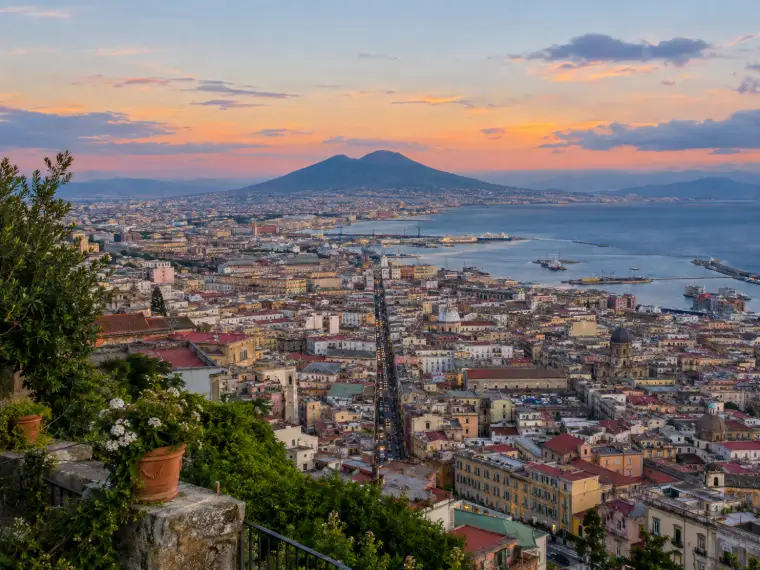
Metro Line 1 serves the entire stretch: Dante at the western end, where you get off for Port’Alba, then Museo, Università and Duomo; Montesanto and Cavour remain nearby. From Naples Centrale, take Line 1 to Duomo or Università, or walk about twenty minutes along corso Umberto I. And if you want to understand where the name comes from, go up: the Montesanto funicular to Morghen, then the Certosa di San Martino and the belvedere. From there, the line is visible in its entirety.
Do you need a guide?
For walking, no: you can walk just fine on your own. But inside a chapel where every statue is a deliberately constructed enigma, without someone to explain, you just look. A two-and-a-half-hour guided tour combines the narrative and the entrances, and saves you from discovering at the ticket office that today the cloister is not included in your time slot. If you have little time, take only the short visit to the Cappella Sansevero; if you walk slowly, a private tour is better. Which one suits you, without beating around the bush, is in is it worth it.
Frequently asked questions
Why is Spaccanapoli so famous?
Because it is the most recognisable line in Naples: the lower decumanus of the Roman city, straight for about two kilometres through the largest historic centre in Italy, a UNESCO World Heritage site since 1995. In just a few hundred metres, Gesù Nuovo, Santa Chiara, San Domenico Maggiore and, a short walk away, the Cappella Sansevero all face onto it. The list in order is in what to see.
Where does Spaccanapoli start and where does it end?
To the west, it begins in the area of via Pasquale Scura, above via Toledo, and ends to the east near via Ottavio Tupputi. However, the section that interests most people is the monumental one, from piazza del Gesù Nuovo to via Duomo. Where it is best to start is explained in where it starts and ends.
What is the difference between Spaccanapoli and the Quartieri Spagnoli?
They are two different places and not even adjacent in the way people imagine. Spaccanapoli is the lower decumanus, within the ancient centre; the Quartieri Spagnoli lie uphill from via Toledo, on the opposite side, and were created in the sixteenth century as housing for Spanish garrisons. From piazza del Gesù to via Toledo is just a few minutes' walk: the full comparison.
Are San Gregorio Armeno and Spaccanapoli the same thing?
No. Via San Gregorio Armeno is a cross street that cuts perpendicularly and connects via dei Tribunali, the main decumanus, to Spaccanapoli. It is the street of the nativity scene workshops, which operate all year round with the peak season from early November to 6 January. When to go without getting stuck in the crowd is in the dedicated page.
How many kilometres long is Spaccanapoli?
From one end to the other, it is about two kilometres. The monumental section, from piazza del Gesù Nuovo to via Duomo, is just over one kilometre and, at a slow pace without entering anywhere, takes about half an hour to walk. The details are in how long it is.
Do you have to pay to enter Spaccanapoli?
No, and this is what most people don’t know: the street is public, always open, partly pedestrianised, and has no admission fee. You pay for the interiors, meaning the maiolica cloister of Santa Chiara, the Cappella Sansevero and the underground, and you pay for the guide if you want one. What increases the cost of a guided tour is explained in how much it costs.
How much time is needed to visit Spaccanapoli?
Half an hour if you just walk it. Half a day if you enter the cloister of Santa Chiara and the Cappella Sansevero, which has timed entry and small rooms. Guided tours of the historic centre usually last between two and three hours: how to organise your day is in how much time is needed.
Is Spaccanapoli safe?
It is a busy and lively street until evening, and the usual precautions for any historic centre full of people apply: keep your bag in front, don’t hold your phone in crowded areas, and watch out for scooters in narrow sections. If it’s your first time, the stretch between Gesù Nuovo and via Duomo is the easiest to walk. The rest, without alarmism, is in is it safe.
Have another question? Write to us at [email protected]